Chris Edeh June 23, 2017 No Comments

FG releases N701bn lifeline to NBET, targets solar/wind energy

Relief is on the way for electricity consumers in Nigeria as Acting President Yemi Osinbajo said the Federal Government is ready to release the second batch of the N701 billion intervention fund to the Nigeria Bulk Electricity Trading Plc. It would be recalled that through the European Union and African Development Bank, Nigeria was able to package an intervention fund of N1.5 trillion to boost the energy sector

Disclosing this on Tuesday in Abuja at the inaugural Nigeria Renewable Energy Roundtable organised by the Ministry of Science and Technology in partnership with the Nigerian Economic Summit Group and Heinrich Boll Stiftung, Nigeria, Osinbajo said the government was committed to further restructuring the power sector. In his words: “We hope that this injection (of the fund) will help. We are also looking at several other reforms in the sector, hoping that the market can become self-sustaining, independent and runs on its own and frees up all of the private sector energy that is waiting to come into the market.”

According to the Acting President, the government would work with the private sector in developing standardised technology packages for energy delivery services in the country by exploring the opportunities for revolving funds for solar and wind projects, all aimed at creating more opportunities for investment. He further said that:”It is the need to break the deadlock of the electricity market structures the the need to explore the options of transforming the competition for markets’ approach, as well as continuing to embark on a broader restructuring of the electricity sector.

“To do that, we need a framework that brings and keeps all stakeholders together towards ensuring that renewable energy becomes an engine of growth for Nigeria’s economy.” Osinbajo added that the administration’s plan was to expand the Solar Home System programme to one million households, creating a few more million jobs.
According to him, President Muhammadu Buhari’s administration was interested in seeing that all rural communities, especially those engaging in agro-based business are given priority attention by the power sector.

“It is in achieving this that the Federal Government had in collaboration with the Niger Delta Power Holding Company, been able to provide a sustainable renewable solar energy solution through end-to-end solution, including a pay-as-you-go system. “I was in Wuna to see it for myself. For the first time in its existence, the village now has solar-powered running water. The school has power and the school hall is now used as a community hall in the evenings. Each home has four points of light.

“Children can now stay up and do some studying at night. Many of Wuna’s women can now process their millet and yams at night. New jobs have been created, solar installers, maintenance, payment systems and so on, the Acting President stated.

Chris Edeh June 23, 2017 No Comments

NESG Renewable Energy Roundtable: Stakeholders call for effective policy framework, smart financing

Stakeholders in the Nigerian electricity sector, have called for a robust policy framework and smart financing measures for renewable energy in the country.

This was the outcome of the Nigerian Economic Summit Group (NESG) CEOs Business Roundtable on “Renewable Energy”, in partnership with the Heinrich Boll Foundation.

Considering the huge energy demands in the country, with a teeming population of over 180ml people, the quest for energy mix has become imperative, leading to the 30:30:30 agenda.

The agenda seeks to galvanize efforts in achieving a 30% contribution from renewables to the power equation of 30gw by 2030. This is to tackle the issue of about 100 million Nigerians, that are currently not connected to the electricity grid.

Giving the opening remarks the CEO of the NESG Mr. Laoye Jaiyeola said the roundtable was focused on establishing the renewable business platform in Nigeria.

Mr Jaiyeola noted that renewables are one of the strongest options for delivering power in Nigeria, and informed stakeholders that the roundtable will encourage and adopt “Made-In-Nigeria” innovative solutions for renewable energy.

Jaiyeola speaking further stressed that the roundtable will intensify the advocacy in the narrative for renewable energy in Nigeria, while it will also discuss investment options in renewable technologies.

Keynote speaker and Research Coordinator, Energy and Climate Policy, Oeko Institute Dr Felix Matthes in his presentation, asserted that at the global trend in energy mix and transition, going renewable is the more robust way, but was much more capital intensive.

Dr Matthes said the key issue for adopting renewables in the case of Nigeria, was identifying the business model that is suitable and adaptable. He said for Nigeria a “Non-technical” infrastructure will be required to ensure a sustainable renewable energy generation.

The German technocrat harped on the need for a robust framework for renewable energy in Nigeria, that has an effective roll-out plan that can drive the entire value chain.

Considering the issues of cost in renewable energy, Dr Matthes said in achieving the set agenda, Nigeria must develop a smart financing structure that attracts investments in renewables.

On the potentials of renewables, Dr Matthes said with a viable public-private partnership, renewable energy will create new businesses and jobs in the country, provide a competitive electricity model and also achieve decentralized electricity in the country.

According to him “In Germany, my country renewables contribute 35% to the power generation”. Renewables are the energy mix of “Wind, Solar and Hydro”.

Participants at the meeting who made their contributions at the interactive session, emphasized the need for a sustainable Nigerian policy/legal framework and financing model that can make renewable energy a viable segment, of the energy sector.

Chris Edeh June 20, 2017 No Comments

FG plans renewable energy for rural communities

Acting President Yemi Osinbajo on Tuesday said Federal Government would provide renewable source of power to at least one million households in rural communities not connected to the national grid.

He gave the assurance during the Nigerian Renewable Energy Roundatable organized by the Ministry of Science and Technology in conjunction with the Nigerian Economic Summit Group (NESG) at the Presidential Villa, Abuja.

Recalling how a rural Wuna village in Gwagwalada local government area of the Federal Capital Territory (FCT), which was unconnected to the national grid, got power through renewable energy initiative by the Niger Delta Power Holding Company (NDPHC), the acting President said the government through the Rural Electrification Agency is developing an energy database that would show community locations and energy demand profiles, which in turn would save Solar Home System / Solar Mini grid providers time and money.

The success story of Wuna Village, where the inhabitants now have running water, with each home having four points of lights, and many women processing their millets with solar powered light, he said, would soon be replicated in over one million rural settlements across the country.

He said: “We are doing 20,000 more homes in this first phase of this exercise and a Pay-as-you-go system to 20,000 households to provide access to lighting and electric power for small devices. The plan is to expand the Solar Home System program to one million households, creating a few more million jobs.

“The Federal government through the Rural Electrification Agency is developing an energy database that would show community locations and energy demand profiles, which in turn saves Solar Home System / Solar Mini grid providers time and money because we have already identified the communities beforehand.

“We are also championing the use of mobile money for solar home system payments.

“The Wuna home solar project is an example of how we can creatively and aggressively provide power to our people by this pragmatic approach to our energy mix.

“We are convinced that renewable energy probably offers us the most sustainable means of increasing energy access to those who have no electricity and have no immediate hope of being connected to the national grid.”


Source…

Chris Edeh May 4, 2017 No Comments

5 States to Build Solar Power Grids

Five Nigerian states are to build solar-powered mini-grids in a bid to help the Federal Government’s resolve to improve electricity generation and supply.

The states are:

  • Kaduna
  • Imo
  • Rivers
  • Delta
  • Ogun,

They will be partnering with GreenElec, a France-based solar energy solution provider for the project.

According to GreenElec’s President, Marvel Hochet, the use of solar-powered mini grids, would help in increasing access to electricity in Nigeria, as well as boost the energy mix initiative introduced by the Federal Government.

He said pilot studies on the use of solar power on major highways, bridges, and streets have been conducted in Imo, Delta, Rivers and Ogun States.

He added that efforts are ongoing to provide solar-powered mini-grids in many communities in the states, which will enable them use solar power for growth.

Firm to boost solar power generation with N715b

SOLAR Nigeria has set machinery in motion to boost solar power energy generation across the country with 13million pounds (about N715b), The Nation has gathered. The fund is to help reputable companies involved in the production of solar energy in Nigeria. Giving this hint at the weekend was the Programme Coordinator of SN, Mrs. Ifunanya Nwandu. She spoke at a renewable energy forum organised by “Power for ALL” in Abuja. Solar Nigeria is a Department for International Development (DFID) funded programme which began in 2014.

The programme was designed to end in 2020 with the mandate to provide grants and technical assistance to companies involved in providing household solar technologies. Nwandu said that the grant would help strong companies to accelerate their expansion to provide solar energy for 25 million Nigerians. According to her, SN has also improved energy access for over 1.5 million people since it commenced operation in 2014.

She said that the organisation had been involved in delivering clean, reliable and affordable solar energy to Nigerians. She said this was possible by accelerating the private markets for off-grid solar solutions. According to her, the SN programme had also earlier provided 38 .3 million pounds to Kaduna and Lagos state governments for various developmental projects. She said part of the projects had resulted in the construction of 175 schools and 11 clinics in Lagos and 34 primary health clinics in Kaduna with solar installations.

She said that the combined projects in both states had resulted in the provision of 6MW of solar power. According to her, in 2016, more than 166,000 solar systems were acquired on commercial terms by individual consumers from companies who benefited from the grants provided by SN. She said that SN was also helping to demonstrate how solar systems could be technically viable to drive growth in the private sector solar market

Nwandu said SN was committed to collaborating with the federal government and state governments to improve renewable energy to health and education facilities, particularly in the northern part of Nigeria. In a related development, the federal government has hinted of plans to partner with relevant organisations to workout modalities for the provision of alternative sources of energy and improved wood stoves for the rural population.

Dr Shehu Ahmed, the Permanent Secretary, Federal Ministry of Environment, made this known in an interview with the weekend in Abuja. “We need to increase the use of cooking gas, liquefied natural gas, while increasing plantation of woodlots in communities or individual farms and avoiding indiscriminate bush burning,” he said.

According to him, government has put in place some strategies to keep the forest safe. This, he said included control of wood exports to ensure forest conservation, engagement of wood-based industries in reforestation and afforestation, enhancing conversion efficiency and increasing value additions for processed wood before exportation.

He, however, said that stakeholders needed to do their bits to ensure the stoppage of deforestation. “We all need to plan and protect our forests everywhere and anywhere, and continue to raise awareness on the need for sustainable preservation of our forests for the future generation,” he said. Ahmed said that the federal government would intensify environmental education in schools and roll out new public awareness programmes on forest conservation and community participation. “Awareness creation on the importance of forest to sustainable development is very critical and that is why we want to catch them young.

“This will also highlight the impact and consequences of human activities on the forests and socio-economic development as well as mobilise all stakeholders against deforestation.

Chris Edeh March 26, 2017 No Comments

UniIlorin partners U.S. company to build $1.5 billion solar energy plant

The University of Ilorin is partnering with a U.S company to build a 500 megawatts solar energy plant as part of efforts to tackle the challenge of power supply in Nigeria. AbdulGaniyu Ambali, the institution’s Vice-Chancellor, disclosed this while speaking at the News Agency of Nigeria, NAN, forum in Abuja on Sunday. “The 500 megawatts is too much for the university alone to utilise; in fact, we in the university require just a maximum of four megawatts.

“Which means the extra 496 megawatts would have to be given to the Federal Republic of Nigeria, either the immediate community or nationwide. I think that is what is being processed. “We have had talks with various stakeholders who are going to be party to the consumption and payment of the 496 megawatts because the project is going to cost about 1.5 billion dollars. “It is a heavy investment. Which means the company that is going to bring the 1.5 billion dollars, has to be convinced that it will recoup its investment.

“They (company) have made tremendous progress, they have talked to the government, they are talking with agencies of government and by the time they harmonise all these products of their discussion, I am sure they will take off and the government and Nigeria will now be the overall beneficiary of all those efforts.’’ Brain Travis, Managing Director of the American company, said the selection of Uni-Ilorin as its partner was because the university had many reliable innovative projects.

Mr. Travis, who described the project as the largest solar plant in Africa, said it would help empower the locals in terms of employment and training. “Most of us probably know there are difficulties with the whole power system in Nigeria. We will all like to have stable power. “We also are going to not sell into the national grid but try to solve the problem by entering into direct contract with Discos; because of the location of Ilorin, we have direct access to six district discos up and down the coast.

“Each of those discos is determining how much of the power they want; they determine when they need the power, how they need it and how they are going to sell it. “So we will be effectively dealing with the people who need the power. So that we do not have the supply chain issues that exists now and that is the reason we are doing the solar project here. It has got good solar radiation.

“We have an excellent host; you heard about the innovative projects of the Vice-Chancellor and it’s that spirit that allows us to come in and negotiate for a significant piece of property. “Also there is an obligation I understand from the university to help the local community. So we are going to be hiring local people as contractors as well as training local people in solar and renewable.” He said the project would be completed in 18 months.

(NAN)

Chris Edeh March 8, 2017 No Comments

FG Targets 30,000 Mega Watts By 2030

Committed to creating the enabling environment to promote investment in the Nigerian energy sector, the FG, with the support of the Africa Development Bank (AfDB), and the European Union (EU), has initiated the development of Nigeria’s Sustainable Energy for All (SEE4ALL), Investment Prospectus.

This is to assist in identifying and coming up with the projects that would be implemented by both the public and private sector in order to achieve the country’s energy mix target of at least 30,000MW by 2030, 30% of which would be renewable energy sources.
The Permanent Secretary, Ministry of Power, Works and Housing (Power Sector), Louis Edozien, at the kick-off workshop for the presentation of Nigeria’s SE4ALL Investment Prospectus (IP) in Abuja, stated that the objective of the workshop was to identify potential energy projects, raise awareness on potential projects to translate the various energy policy targets into pipelines of implementable projects and prepare an investment prospectus document that would guide stakeholders in the energy sector.
The Permanent Secretary, who decried the slow pace of implementation of the policies and target since 2012 , stated that the country was already behind schedule and therefore enjoined the participants to speed up the process so as to attain the expected target.

“A good plan is not necessarily a good outcome”, Edozien said, emphasising that more work needed to be done to achieve the goal.

Read more

Chris Edeh March 8, 2017 No Comments

Nigerian Economy: Green Bond To The Rescue

It is widely recognized that climate change presents one of the greatest challenges of the world today. Its deleterious effect spreads tentacles over developing and developed countries, in particular, making their population and means of livelihood vulnerable. In the midst of this vulnerability, an opportunity resides for African economies to grow in a manner that is climate resilient, ensure poverty reduction whilst meeting its energy deficiency and one of the innovative means of exploring this opportunity is through the issuance of green bonds, which is fast gaining recognition as means of raising finance for climate friendly purposes. According to World Bank report, the world is facing an enormous bill to address the potentially apocalyptic issue of climate change. Climate change could push an additional 100 million people into poverty by 2030, if no action is taken to end extreme poverty, improve access to basic services and build resilience.
All over the world, infrastructure contributes to economic development by increasing productivity and providing amenities, which enhance the quality of life. The services generated as a result of an adequate infrastructure base will translate to an increase in aggregate output. However, investment in infrastructure services, such as transportation, road, electricity and water are intermediate inputs to production, this is because infrastructure services tend to raise productivity of other factors. The country’s huge infrastructural deficit in power, housing, roads, healthcare, port services among others, have contributed to a large extent in retarding the growth and development of the economy.
Meanwhile, against this backdrop of the comatose state of the economy, governments and stock market operators have agreed that tapping into the green
bond market, which has gained global acceptance will be crucial to climate finance and intensify efforts on infrastructural development to enhance citizens’ standard of living.
Also, experts believed that since the banking sources are unable to meet the growing financing needs in Nigeria’s infrastructure, there is need to bridge the infrastructural gap through the green bond market to achieve the desired growth.
Understanding a green bond
A green bond according to Investopedia, is a tax-exempt bond issued by federally qualified organisations or by municipalities for the development of brownfield sites. Green bonds are created to encourage sustainability and the development of brownfield sites. More specifically, green bonds finance projects aimed at energy efficiency, pollution prevention, sustainable agriculture, fishery and forestry, the protection of aquatic and terrestrial ecosystems, clean transportation, sustainable water management, and the cultivation of environmentally friendly technologies. The tax-exempt status makes purchasing a green bond a more attractive investment compared to a comparable taxable bond, providing a monetary incentive to tackle prominent social issues such as climate change and a movement to renewable sources of energy.
Paris pact on bond
The out-gone Minister of Environment, Amina Mohammed, said under the Paris Agreement, developed countries reaffirmed their commitment to mobilise $100 billion of resources by 2020 to support developing countries ‘enhance the implementation of their policies, strategies, regulations and action plans and their climate change actions with respect to both mitigation and adaptation.’
Mohammed, who spoke at the Green Bonds Capital Market and Investors Conference tagged ‘Green Bonds: Investing in Nigeria’s Sustainable Development, at the Nigerian Stock Exchange (NSE) recently, noted that this objective will remain in place to 2025 and will act as a floor from which flows shall increase beyond 2025.
The provision of these resources will be indispensable if Nigeria is to realise its NDC, especially the 45 per cent emissions reduction and the adaptation and resilience building activities.
“The Paris agreement, which was signed by Mr. President enabled us to develop our Nationally Determined Contribution (NDC) and constitute the Inter-Ministerial Committee on Climate Change charged with the responsibility for cross sectoral integration of Climate Change issues into main stream planning and also to identify a pipeline of projects which the Green Bonds will fund. The delivery of Nigeria’s NDC will require a fundamental re-orientation of financial flows within the economy. “Capital will need to flow toward low-carbon, climate resilient opportunities and away from carbon intensive, polluting activities or those that exacerbate climate vulnerability leading to poverty, insecurity, reduced health quality among other things,” Mohammed said.

Nigeria takes the lead in Africa
In order to key into the initiative, the federal government need to achieve the targets in the NDCs by 2030 are put at around $142 billion, translating to about $10 billion per annum. Nigeria’s confirmed recession and reduction in its main source of income requires creative and directed means to mobilise resources that will fill its funding gap while also ensuring that project implementation achieves the expected outcomes.
While the country will commence the issuance of its first N20 billion sovereign green bond this month, March, 2017 to fund projects to reduce carbon emissions and develop renewable energy in the country.
The out-gone Minister of Environment said the green bond will be the first to be issued in Africa, stressing that issuance of the bond will be the first stage in enabling Nigeria to tap into the growing global market for green bonds. Mohammed said, “Green Bonds present an opportunity for us to begin to achieve this. The process, which will see Nigeria launch the first Sovereign green bonds in an emerging market, began as a seed, which was sown by the private sector and the Nigerian Stock Exchange. So you can say we have achieved half the circle and will come full circle when we finally issue the bonds this quarter. “Since we began this journey we have taken a number of steps, which you will hear, later on, to ensure that we are able to sustain a bigger plan for the inflow of additional funds through subsequent issuances thus beginning the process of attempting to green our economy,” she said. Mohammed said the bond would be aimed at domestic markets and its focus would be on low-emission projects in areas including solar power, agriculture, transport and deforestation. She said the Ministry of Finance through the Debt Management Office (DMO) who are responsible for managing the process have been instrumental to laying solid foundations for this process.
Objectives of bond issue
The Acting President, Professor Yemi Osinbajo, said the bond will be used to fund a range of climate-related initiatives including mass transit, energy and aforestration programme. He said the launch of the first African green bonds is the one that will tap into local and international investors.
Osinbajo noted that it was a crucial achievement for Nigerians’ determined battle against the consequences of climate change, adding that the challenges of climate change has the potential of increasing natural disasters affecting foods and water energy supplies.
The acting president said, “As confronted with these realities in reviewing securities concerns in lake Chad region and parts of northern Nigeria, with the group of experts and government officials.
The drying up of lake Chad has made the destruction of hundreds and thousands of agricultural livelihoods and worsening of poverty in this region and more importantly fueling civil conflicts in the region as fight over available arable land flay up regularly. “Green bonds means that the proceed will be applied to environment and climate friendly on green projects. We are witnessing an alliance between finance and environment. It is an opportunity to deepen our capital market and make a dent in combating poverty and inequality. “We are doing 20,000 more homes on solar energy, which will benefit from the green bonds. Another project, which will benefit from the green bond includes renewable energy.
An important feature of the 2017 budget is energising education, it will also benefit from the green bond. Power has posed a major challenge to effective learning in our universities. So, this programme will give access to power to 37 federal universities and seven university teaching hospitals among others.”
Explaining more on the targets of the Green Bond issue, Mohammed noted that the Government’s new proposed Economic Recovery and Growth Plan identifies the Green Bonds as one of the alternative sources of financing. She said the deal will drive further investment in agriculture, oil and gas and infrastructure development which will in turn grow Small and Medium Enterprises (SMEs), manufacturing and stability of new and old businesses in the areas of job creation and revenue generation for the economy.
The Minister of Power, Works and Housing, Mr. Babatunde Fashola, said that the initiative was based on extensive consultation, saying that the DMO would determine the amount that would be used for all projects earmarked under the Green Bonds. He said that Nigeria was working toward achieving 30 per cent in renewable energy by 2030, adding that Solar Unit Distribution Programme (SUDIP) project was estimated to cost N1.3 billion. According to him, the units in aggregate from the project will provide up to 12mws of power, creating 6,000 jobs and impacting at least 60,000 persons.

Calling on investors’ participation
Mohammed called on the domestic capital markets to rally round the issuances. According to her, our domestic market need to rally around our own domestic issuances. The recently issued Euro Bonds are a testament to us that the Nigerian Market is still viable. So, let’s translate that to domestic issuances. Greening our economy and financial systems will in the long run support our sustainability efforts and improve the economy as it will open new avenues for new types of jobs, innovation and skill.

Stakeholders’ view on green bonds

Following the Federal Government’s aspiration to make the economy green, investors in the Nigerian capital market have lauded its effort to revive the economy with the 2017 sovereign green bonds initiative. For instance, chief executive officer of the Nigerian Stock Exchange (NSE), Mr. Oscar Onyema said oversubscription in Green Bond issuance is commonplace, meaning that the planned issuance by Nigeria will record significant patronage.
According to him, assets under management by signatories to United Nations-supported Principles for Responsible Investment (Green Investment) rose from $4 trillion in 2006 to $60 trillion in 2015. Besides, he said assets managed by institutional investors in the Organisation for the Economic Cooperation and Development (OECD) countries are projected to hit $120 trillion in 2019.
This, Onyema explained, are signals of a vibrant green bonds market that Nigeria will benefit from.
The chief operating officer of InvestData Limited, Ambrose Omordion, disclosed that the Green Bonds issuance, which will be the first stage in enabling Nigerian tap into the growing global market for green bonds, worth about $576 billion of unlabeled climate-aligned bonds and $118 billion of labeled green bonds as at the end of 2016, represents a new stage in development of Nigerian capital markets and opens the way for further corporate issuance and international investment.
Also, the managing director of Highcap Securities Limited, Mr. David Adnori said, “Stakeholders should play key role to help develop this enormous opportunity for Nigeria and fulfill one of the key objectives of members of the United Nations Sustainable Stock Exchange Initiative.”
According to Adnori, this is the first green bond issuance in an emerging market like ours and it presents an opportunity in the diversification of our economy and it will bring together institutional investors, banking finance and young social entrepreneurs that will ensure this initial bond launch is a success, enabling the development of a green bond market while building our national climate finance capabilities.
In the midst of the current uncertainties in the Nigerian economy and the country’s journey towards vision 2020 is noble, the issuance of green bonds by various levels of the Nigerian government or corporate entities will serve as a boost of the country’s economic deficit for infrastructural development and enhance its reputation for commitment to the environment, thereby making it attractive for both local and international financiers.
Meanwhile, the government needs to focus strongly on institutional policy changes and sector reforms. This is essential towards improving the investment climate capable of attracting private investors at the level that can meaningfully aim at financing the nation’s infrastructure deficit and meeting its strategic programme over a more attainable time line. But while bonds are veritable sources of funding needed to bridge Nigeria’s infrastructure deficit, such bonds will only be attractive to investors if the underlying projects are viable, properly developed and satisfy the bankability test. That onus lies on government, professional advisers and other stakeholders to make a success of Africa’s maiden sovereign green bond.


Source…

Chris Edeh February 8, 2017 No Comments

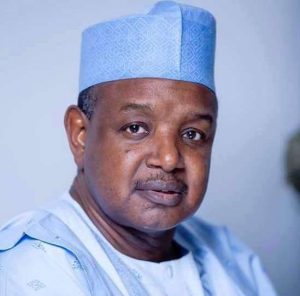
Kebbi To Install 200MW Solar Plants Soon – Gov Bagudu

Kebbi State is currently negotiating to put up a 200MW Solar plant which will aside ensuring stable power supply, reduce unemployment and guarantee development, governor, Atiku Bagudu has assured. Governor, Atiku Bagudu who spoke yesterday in Sokoto while declaring open the 2nd Africa International Renewable Energy Conference (Solar Africa) at the Usmanu Danfodiyo University, insisted that, the nation has a lot of energy challenges.

The governor, says it is high time the country strive towards achieving energy dependence, maintaining that funds should be made available for research institutions that will help in that direction. The governor decried the attitude of Nigerians in defending of import of renewable energy tools manufactured and subsidized from other countries rather than striving to develop and boost our local engineers to manufacture same.

Bagudu lamented that such dependence mentality discourages local manufacturers. “Lots of progress have been recorded in renewable energy around the world. But we just realise that, the more we depend on importation, the more it becomes difficult for us to develop our local technology.

“Our research effort should embody within it a strategy which will elicit stakeholders position for those in leadership position at whatever level to provide funds for research which might not be profitable at the moment but will be of great benefit with time”. Collaborating governor, Atiku Bagudu’s developmental effort, especially as demonstrated by turning Kebbi into a leading rice cultivation state in the Nigeria, the director general, Energy Commission of Nigeria, (ECN) Prof. Eli Bala said the country’s master plan for solar energy actually began in Kebbi state.

Bala who was represented by the director renewable energy, Prof. Dioha Joseph assured that every state in Nigeria has abundant renewable energy. “The master plan for solar energy in the country took it’s root from Kebbi state. The first energy village in Nigeria was in Kebbi state,” he said.

Chris Edeh February 8, 2017 No Comments

Nigeria to Explore Biofuel as Alternative Source of Energy

(VON) Nigerians have been called upon to support the government in ensuring that Bio fuel as an alternative source of energy strives in the country.

The call was made by the Executive Secretary of the Petroleum Product Pricing Regulatory Agency (PPPRA) Mr. Victor Shidok at a sensitisation workshop on Biofuel Development in Abuja Nigeria’s Capital.

Mr. Shidok said the dissatisfaction of stakeholders with the existing Gazette on Biofuel policy which was import-dependent and import driven necessitated a policy review to which the agency decided to organise a sensitisation workshop to bring to the notice of all Nigerians bold policy initiatives of Government being designed for a more productive
energy mix.

He added that the workshop was to make Nigerians understand that there are alternatives to Fosil fuel and other potentials that Nigeria can tap to make sure we diversify the economy. He said one of the areas being explored is the area of ethanol which has to do with Biofuel Bio diesels which are agricultural based products.

He said if the policy is fully exploited in the next two years, Nigerians should begin the exploration of Biofuel.

Mr. Shidok said “government is making deliberate effort to renew the development of other sources of energy as alternatives to Petroleum Products and as such, the country should not be left behind in ensuring the development and commercialisation of Biofuels as an Alternative Energy source especially now with the reality of a gradual depletion of our hydrocarbon base’’.

‘Emphasis of Government on domestic production and self sufficiency should be the primary focus of all stakeholders, in our quest at developing a pragmatic Biofuel policy for the Nation’,’he added.

Also speaking at the workshop was the Minister of state for Petroleum
Dr. Ibe Kachikwu according to him, “I am particularly impressed by the commitments of the organizers of this laudable initiative and the contributions from all stakeholders in developing and adopting the draft Biofuel policy and Initiatives. As the world continues in search of better and cheaper energy through renewable energy resources, one cannot but admit that the advantages of Biofuels utilization are legion. Therefore, this workshop is expected to further enlighten Nigerians on the Economic, Environmental and Agricultural and Social
benefits to the country
”.

Biofuel is a fuel that is produced through contemporary biological processes which comprises of Bio-ethanol and Bio-diesel which are blends of petroleum and Agricultural products. The theme of the sensitisation workshop is Biofuels: Nigerian New Economy.